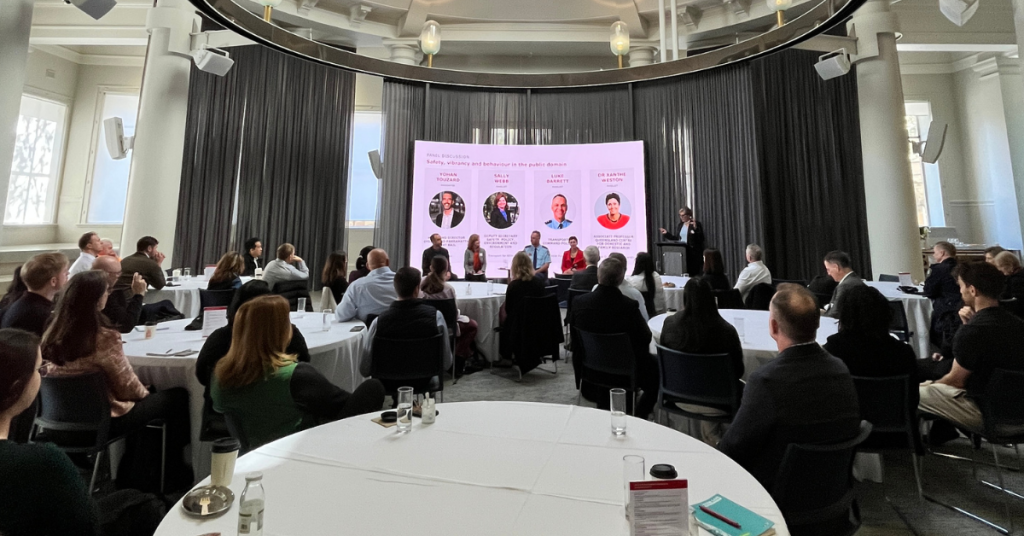
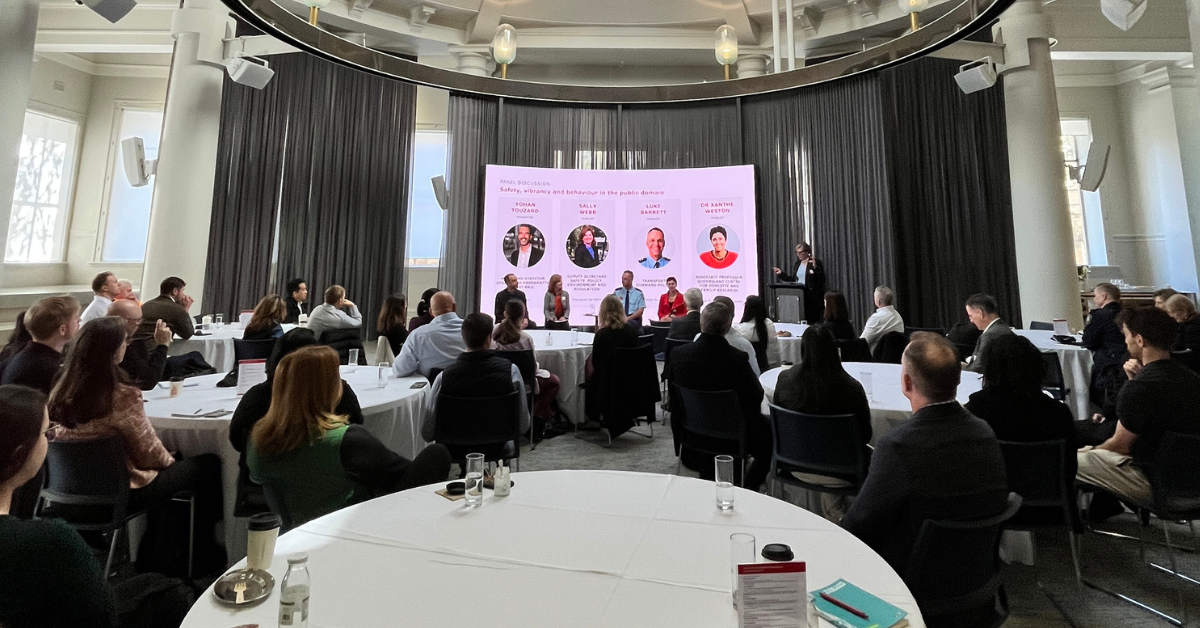
Following a Welcome to Country from Michael West of the Metropolitan Local Aboriginal Land Council, keynote speaker Dr Xanthe Weston, Associate Professor at Central Queensland University, set the tone by examining the social drivers behind antisocial behaviour in public spaces.
“When public mental health crises and antisocial behaviour visibly intersect, they act as powerful psychological multipliers that dramatically elevate the community’s fear of victimisation,” Dr Weston said.
Dr Weston pointed to the erosion of so-called “third spaces” as a contributing factor: “The combination of these issues forces residents to constantly recalculate their daily routines,” she said, pointing to environmental design, pedestrian activation and improved mental health responses as key levers for change.
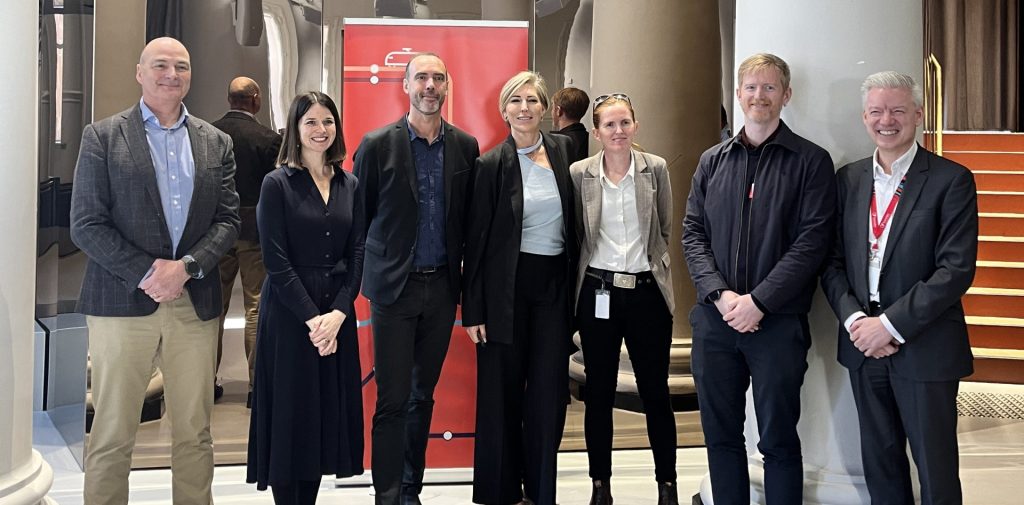
Amanda Tarbotton, General Manager Safety & Assurance for Transdev Sydney & Parramatta Light Rail, followed with a presentation on psychosocial risk, urging attendees to see incidents from every angle.
“Put yourself in the shoes of not only the employees of Sydney Light Rail, but the perpetrators and onlookers,” Ms Tarbotton said.
She stressed an empathetic, intersectional approach to antisocial behaviour, but was clear that violence against the workforce of public transport should not be considered “part of the job”, noting underreporting is prevalent.
A conversation between Annabel Castledine, General Manager Operations for Transdev Sydney Light Rail, and Primrose Busary, Network Security Officer at Yarra Trams, explored the “grey area”: incidents that don’t meet the threshold for police involvement but still demand a response.
Newly-introduced legal obligations mean lone working, non-physical assaults and psychosocial hazards all warrant serious attention.
Amanda Tarbotton, General Manager - Safety & Assurance, Sydney Light Rail
“The uniform of our Network Security Team attracts attention, but it’s an opportunity for our team to banter and engage with passengers,” Ms Busary said.
“Just because someone is a ‘person of interest’ or known to the team for their behaviour in the past, it doesn’t mean we don’t give them… grace and trust.
“These are human beings, and they deserve that.”
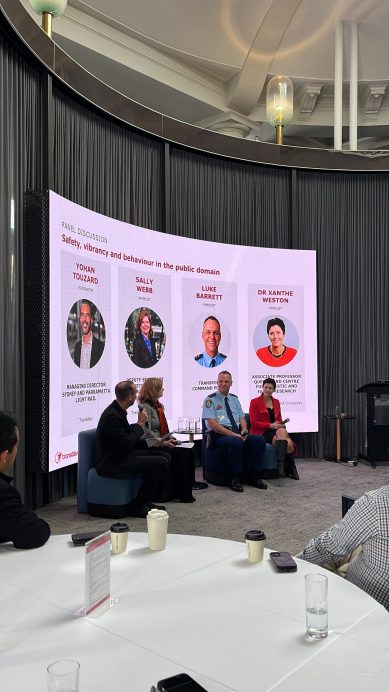
The forum closed with a panel on safety, vibrancy and behaviour in the public domain, moderated by Yohan Touzard, Managing Director of Transdev Sydney & Parramatta Light Rail, featuring Sally Webb (Transport for NSW), Luke Barrett (NSW Police Transport Command) and Dr Weston.
“If you make an environment feel unsafe, you cut people off; they can’t access their community,” Ms Webb said. “If women feel safe, everyone else feels safe.”
Ms Webb pointed to Transdev’s signing of the Women’s Safety Charter in May as a practical step toward that goal, with design principles like visibility, presence and predictability central to making passengers feel secure at every stage of their journey.
Mr Barrett reinforced that de-escalation, not enforcement, is often the right first response.
“Not all antisocial behaviour passes the criminal threshold,” Mr Barrett said. “Early intervention puts people on notice and changes behaviour.”
The Forum reflects Transdev’s ongoing commitment to network safety and collaborative approach to achieving this. We’d like to thank our partners and stakeholders for working with us to date and looking forward to turning today’s conversation into actions that keep our people, passengers and communities safer.
Just because someone is a ‘person of interest’ or known to the team for their behaviour in the past, it doesn’t mean we don’t give them… grace and trust.
Primrose Busary, Network Security Officer - Yarra Trams